
Engineering
Design and practice of AIOps, security operations and LLM infrastructure
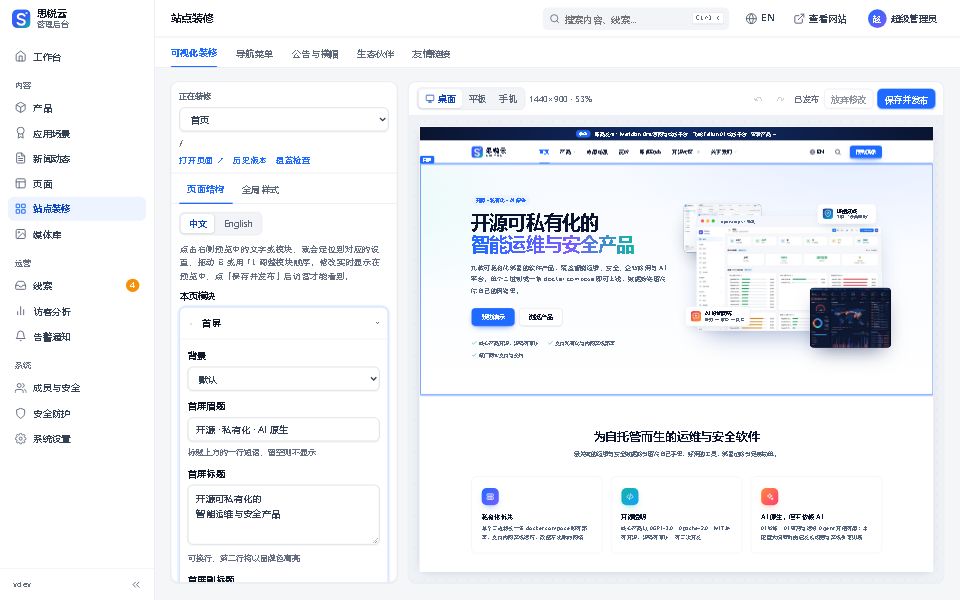
Editing every page as you see it: how Meridian's visual editor is designed
Meridian's visual editor covers every page and every module on it: the preview uses the same templates as the live site, clicking the preview focuses the matching field, everything stays a draft until you publish, published versions can be previewed and rolled back, and a built-in coverage check makes sure nothing is missed.
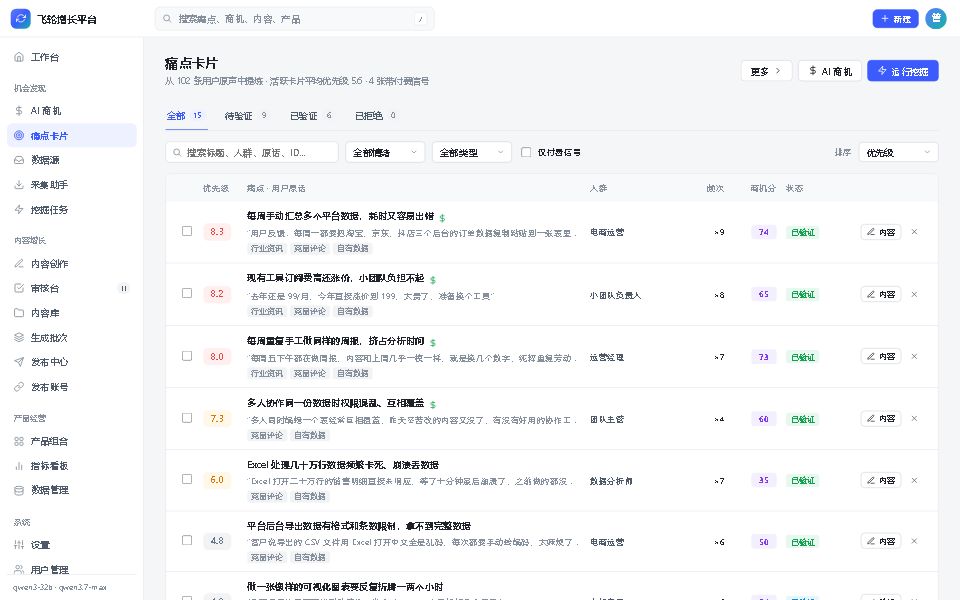
From a thousand negative reviews to a dozen pain cards: Feilun's pain mining pipeline
Feilun runs user voices through cleaning and masking, exact and near de-duplication, batch tagging, semantic clustering, card distillation and scoring, ending with uniform pain cards whose quotes can be traced back; the pipeline is idempotent, so re-running it never creates duplicate cards.
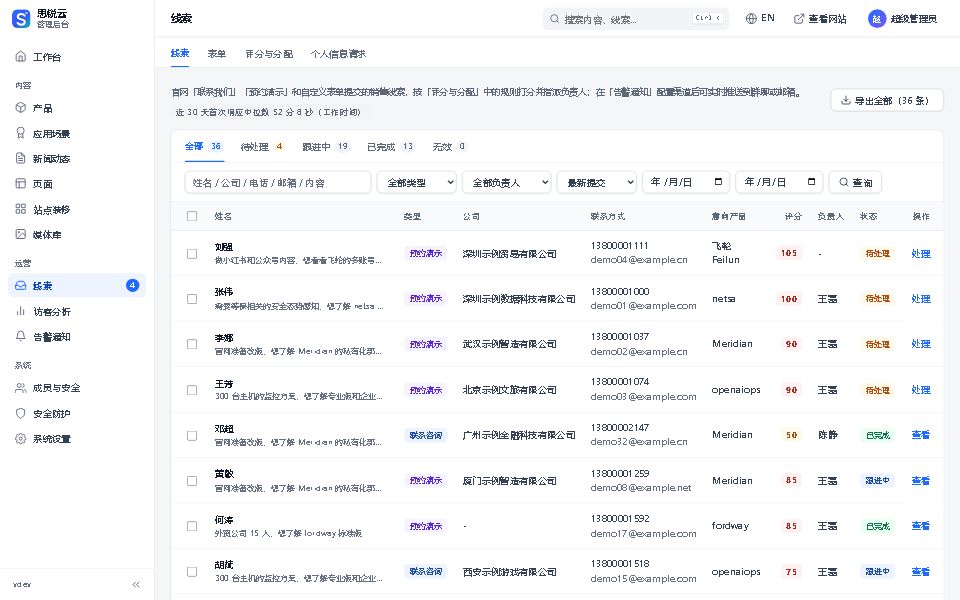
From visitor to opportunity: forms, lead scoring and assignment in Meridian
Meridian makes sure every lead gets followed up: custom forms and anti-spam checks keep leads genuine, rule-based scoring uses form answers and pre-submission browsing, assignment rotates to the member who has waited longest for a lead, and response deadlines in business hours trigger alerts.
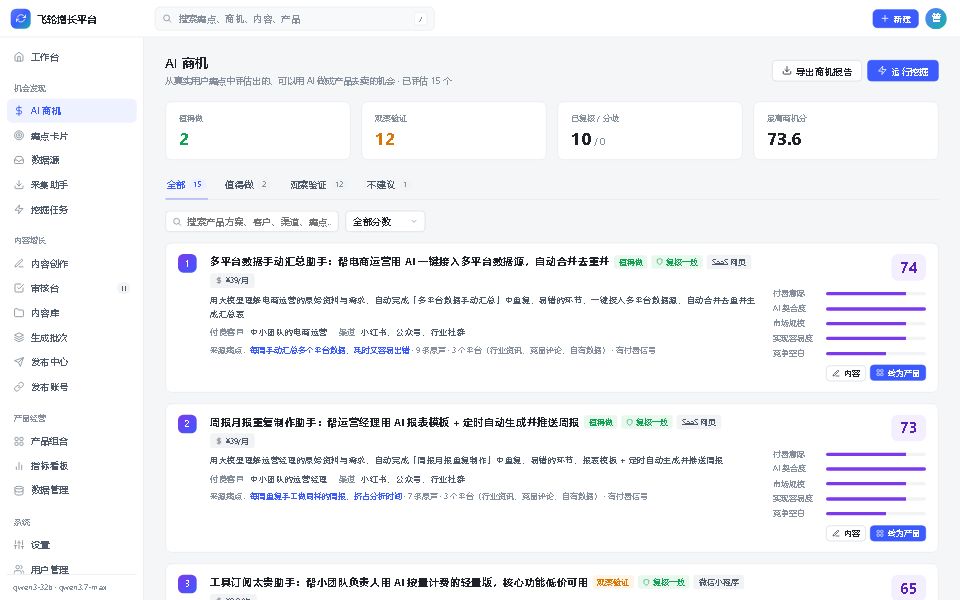
How Feilun scores AI opportunities: five dimensions, cross-platform evidence and a skeptical-investor review
For every pain card, Feilun writes a product proposal with five-dimension scores from a product manager's point of view, combines it with engagement and cross-platform evidence into an opportunity score, then has a skeptical investor review it independently and keeps the more conservative verdict.
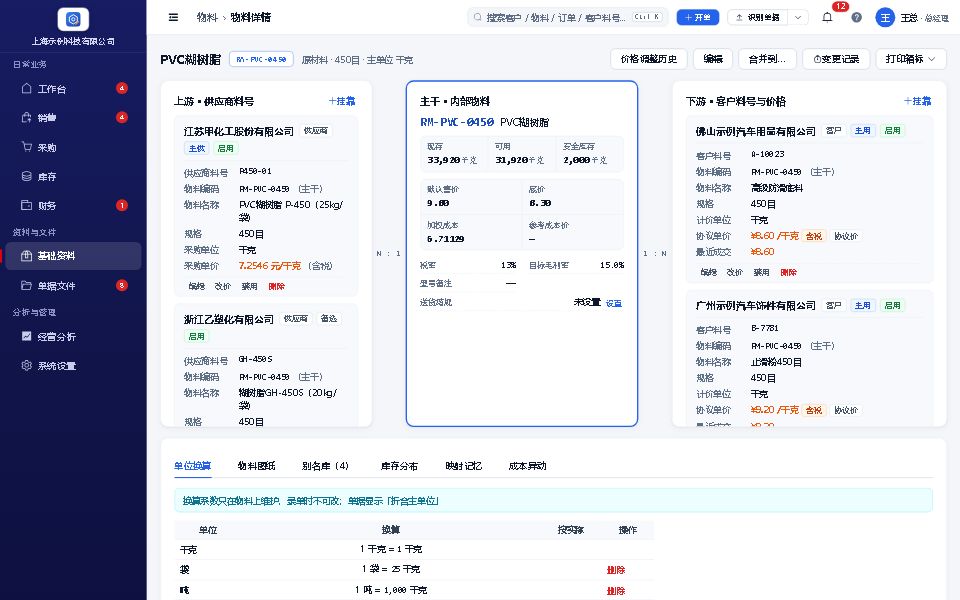
One item, many names: fordway's three-layer item mapping and four-step matching
Customers, suppliers and your own team each name the same item differently. fordway anchors everything on one internal item, attaches supplier and customer part numbers to it, and uses four-step matching to translate any wording on a document into the right item.
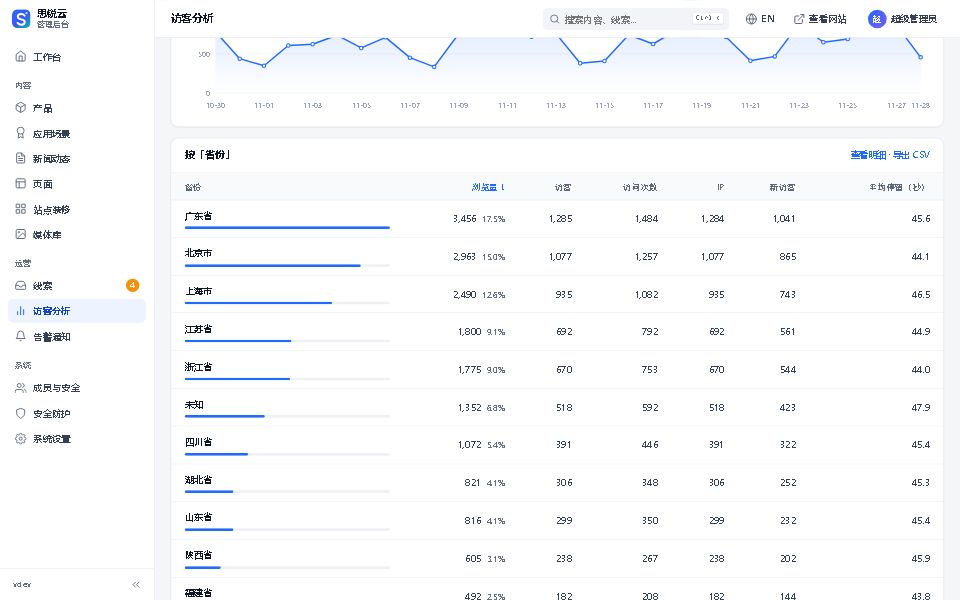
Seeing your visitors without a third-party analytics script: Meridian's server-side analytics
Meridian records visits on the server while rendering the page, buffering in memory and writing in batches so requests never wait for the database; a built-in IPv4 and IPv6 database provides regions, more than 20 dimensions can be combined and drilled into, and search engines, AI search and AI crawlers are told apart.
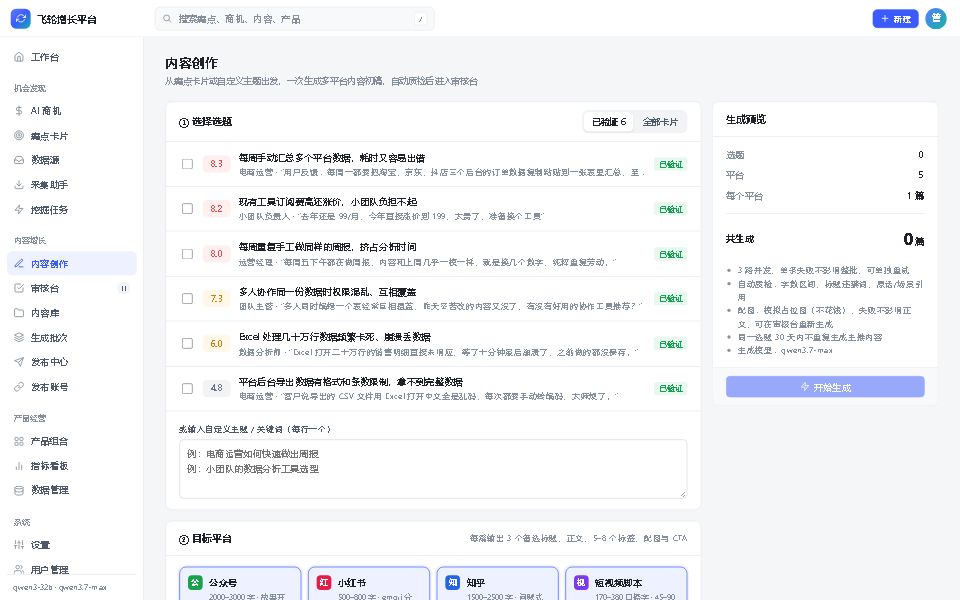
One topic, five platforms: how Feilun's content factory generates illustrated posts in bulk
Starting from a pain card or a topic, Feilun's content factory generates posts for WeChat Official Accounts, Xiaohongshu, Zhihu, short video and WeChat Moments in different lengths and from different angles, checks their quality, adds images and sends them to the review desk.
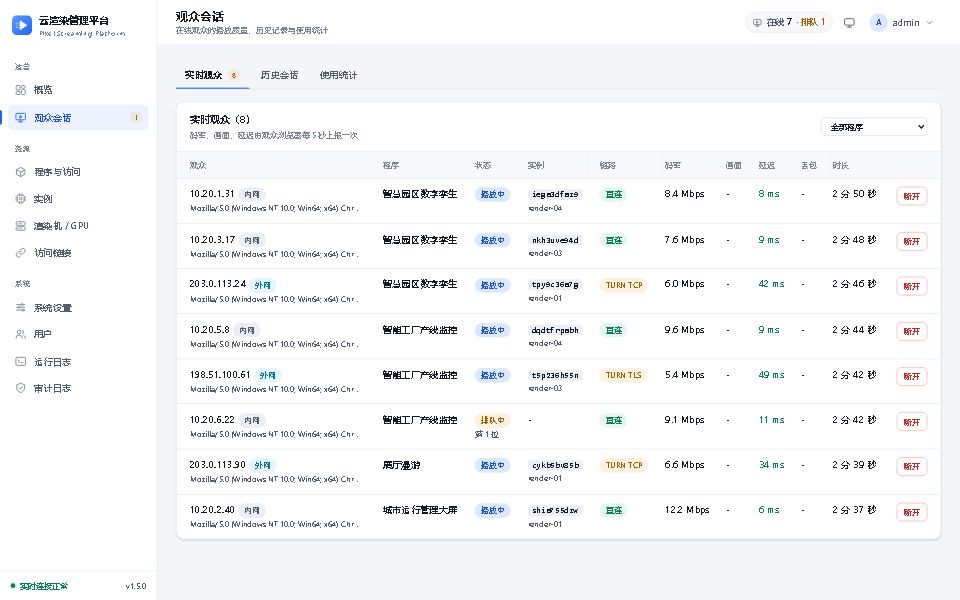
Why Pixel Streaming goes black on the public internet: WebRTC, TURN and single-port multiplexing
WebRTC media cannot pass through an HTTP reverse proxy, but it can travel over TURN on TCP or TLS. UEPS uses nginx stream to split web pages, signaling and TURN on one port by whether a connection uses TLS and carries ALPN, and the TURN server reaches UE over UDP inside the network.
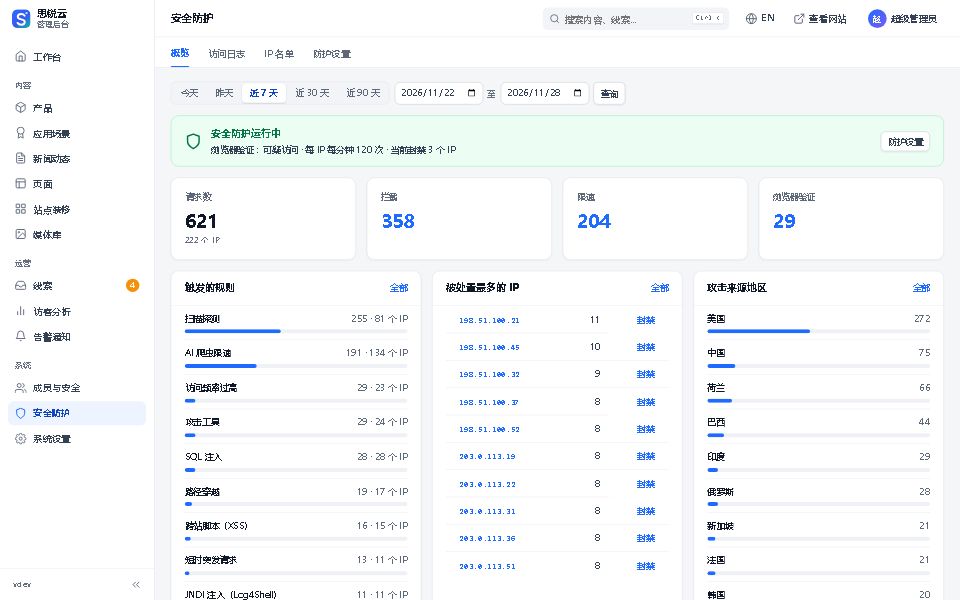
Company websites get attacked too: Meridian's built-in firewall and request log
Meridian checks every request before any page handles it: attack patterns and scanners blocked, rate limits with an invisible browser check, automatic bans by violation score, crawler DNS verification and AI crawler rate limits; the source, location and outcome of every request go into a request log kept 180 days by default.
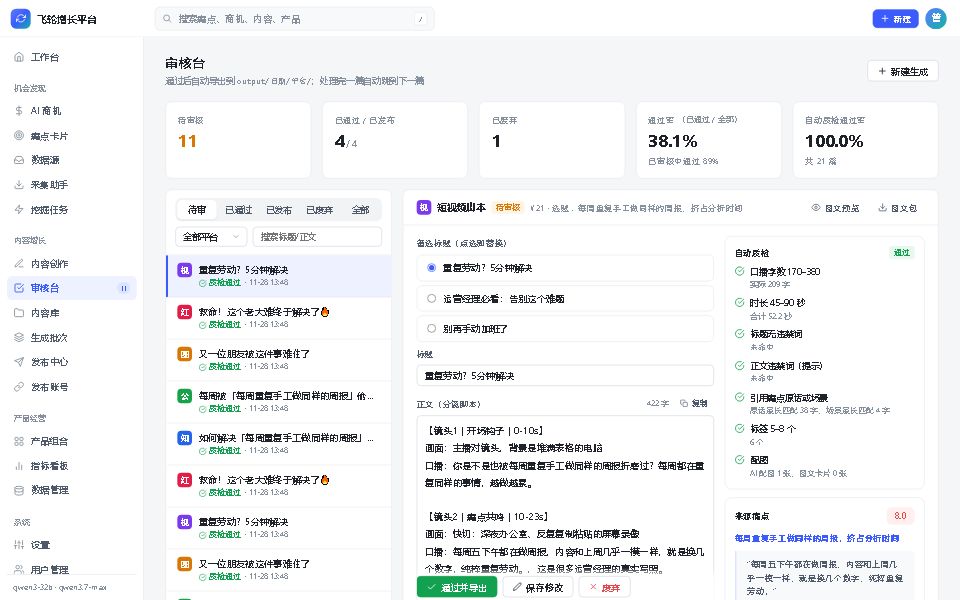
Publishing to many accounts reliably: the WeChat API, browser publishing and the clipper
Feilun binds several accounts per platform: WeChat Official Accounts use the official API to save drafts or publish, while Xiaohongshu and Zhihu tasks are claimed and filled in by the clipper in a browser signed in to that account, with leases, a retry cap and de-duplication; the same clipper also collects user voices while you browse.